Green Fields Of France Willy Mc Bride

To Those who fought in all wars rest in peace
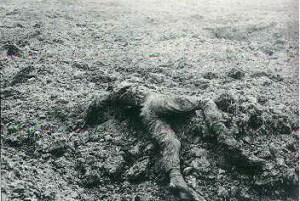
 

Green Fields Of France

courtesy internet

In a quaint French country graveyard in the village of Authuille (5km north of Albert and close to the battlefields of the Somme) a wreath, with its leaves now withered, rests against a white headstone.

On its inner rim green, white and orange ribbons and a circle of synthetic poppies still stand out against the brown earth below.

This is the last resting place of Private William McBride who served with the Inniskilling Fusiliers and lost his life on April 22, 1916.

He was just 21 when he was killed – one of so many Irish men to have lost their lives in the Great War – but in song his memory is preserved.

Though there were eight soldiers named ‘William McBride’ listed with the British forces, and a further six registered as ‘W McBride’ who died in France and Belgium during World War I, it’s believed the William McBride buried in Authuille is the one on whom the song ‘The Green Fields of France’ is based.

The song’s Scottish composer, Eric Bogle, recently confirmed that this was one of the graves he sat by before writing the emotive song words – though Private McBride was 21 when he perished – and not 19 as the lyrics state.

Bogle allegedly told a local historian that the grave (of ‘his Willie McBride’) belonged to a soldier who was with this battalion – without being specific about the location of the grave.

In the same cemetery I find the headstone of a Private W McBride who died in February 1916 but records fail to confirm his age (most believe he was 19).

Some are convinced that, in fact, this is the ‘Willie McBride’ in question but Bogle’s testimony seems to contradict this.

The composer has been reluctant to clearly pinpoint the source of his inspiration beyond all reasonable doubt – perhaps all of those fallen acted as inspiration en masse.

In the song, made famous by the Fureys and Davey Arthur, the singer asks ‘Did they Beat the drum slowly, did the play the pipes lowly? Did they sound the death march as they lowered you down? Did the band sound the Last Post in chorus? Did the pipes play the Flowers of the Forest?’

On the day I visit the only sound is that of the gentle breeze blowing through the manicured trees which shelter the cemetery on each side.

Private William McBride may have been buried with military honours (though it’s more likely during the intensity of war his body was interned quickly without such a ceremony) but for most of the last century his grave site has been peaceful – so at odds with the conflict that ended his young life.

But who exactly was the Willie McBride we now sing of – the fallen soldier and mother’s son the song’s composer says he prayed over?

One of four children, born to Joseph and Lena McBride in the small Armagh village and townland of Lislea in 1897, a young William attended the Crosskeys National School.

From a Presbyterian family he would have been a regular mass-goer at the local Temple Presbyterian Church.

Interested in becoming a cobbler before war broke out, a teenage Willie would serve his time in the ‘shoe trade’. Initially he worked as an apprentice in Aitkens, Cootehill. He then went to Irvine town for a short time before moving to work in Belfast.

Eager to do his bit for the war effort, Willie enlisted in the army in Belfast just nine months before his death. He would serve with the 9th Battalion of the Royal Inniskilling Fusiliers which was formed in Omagh in September 1914 and was known as ‘the Tyrones’.

Interestingly, the 12th battalion of the Inniskilling Fusiliers fought against the Irish rebels on Easter week in 1916 in Dublin with two of its soldiers dying and seven being wounded.

On the day Willie McBride was killed fighting conditions in the trenches were even more devastating and bleak than usual.

The rain poured in, men stood in water up to their waist – many half-waiting for death. Furious German shelling came on a continuous basis and sick men tried to hold onto their positions.

It simply was hell on earth. The end was inevitable for most, including Willie McBride.

Looking out over the beautiful flatlands near Authuille today it’s hard to imagine that these green expanses were turned into such bloody killing fields for the likes of the youngster from Armagh.

The irony is that these ‘Green Fields’ once ran red with blood.

An entry in the cemetery log by a ‘James Crowley from Cork, Ireland’ reads ‘Willie McBride – you gave your young life for the cause of freedom – every time we sing your name we’ll remember your sacrifice and that of so many brave Irishmen who fought this most brutal of wars so far from your native homeland. May you have found rest ‘where the red poppies dance.’

The Green Fields of France

The story of 19-year-old Private Willie McBride who died in 1916 recently inspired four young Dublin schoolboys to delve into the history of World War I.

The result is a book exploring the futility of war, which has been published by the Glasnevin Trust and is for sale in the museum gift shop in Glasnevin.

Inspired by the Eric Bogle ballad, ‘The Green Fields of France’ the boys from St Paul’s in Finglas, Michael McDonagh (15), Ciaran O’Connor (14), Aaron Boylan (14) and Jamie Broughan (14), used the internet and the commonwealth war graves database to attempt to find the ‘real’ Willie McBride behind the classic song.

During their research they discovered that 19 Willie McBrides were killed in World War I, all of Irish descent. Two died in 1916.

They concluded that the most likely subject of the song died on February 10 and is buried in a French cemetery near the town of Albert.

Their book is a tribute to all Irishmen and Willie McBrides who perished in the Great War.


Leave a comment

Filed under Art Tickle

Halloween Visitor

The Halloween Visitor

The darkened room is lit only the light escaping from the grinning slit mouth of the pumpkin. It casts Angela’s face into a shimmering ghoulish green. Her blood pumping in her chest, she draws her black gloved hand across the glassy surface of the shadows of the oval mirror and waits for him to come.

Her pulse race. Her heartbeats hammer in her ears. She holds her breath in anticipation. The year had stretched and dragged since his last visit last Hallowe’en.

Outside there is a whoosh of fireworks that set the sky ablaze with colour.

Her eyes scan the dark recesses of her childhood bedroom beyond; seeking him in the shadows cast by the crack in the oval mirror.        She furrows her brows.

Tonight she will ask him why he only comes to her at Hallowe’en.

In the jagged edged crack that snakes across the mirror an image begins to take shape of a sad face with a turned down mouth, and hazel eyes uncannily like the shape and colour of her own eyes.

In the kitchen below, the revellers pile in.The smell of pumpkin wine and the aroma of nutmeg and cinnamon spiked apple pie drift up the stairs and under the gap in the bedroom door.

Hallowe’en celebrations have begun. Soon she will hear her father’s impatient shout of, “Angelina, “it’s your turn to strike the match and set the bonfire alight, my darling daughter.”

The face in the mirror is fully formed now. A sliver of excitement trickled down her spine. He’s here! He is real? She was so afraid he might only existed in her imaginings?

He stares back at her from the mirror. Their eyes lock. She feels the magnetic pull of his unwavering gaze drawing her in.

His lips move forming silent words to her unspoken question. Who are you? Why do you only come to me at Hallowe’en?

‘I am your twin’.

His answer startles her. She feels her eyes widen. The pupils growing round.

Her twin!

As he holds her gaze, strange long ago remembering awakens in her mind. The beating of two hearts together as one rhythmic pattern. Him and her in a deep warm void, the warm sensation of his nearness and the feel of the clasp of his fingers in hers.

Shock reverberates through her. He is the other half of her.

He is her dead twin.

His gaze draws her closer still.

Why do you only come at Halloween? The question hammers in her brain.

It is the day they tore me from you – separated us so you could live.

His sense of silent abandonment fills her with agitation for him. She moves still closer to the mirror so their faces press together.

He has come back for her. Like her he is incomplete.

“This Hallowe’en we will be joined again,” she cries out. Her breathless promise blurring  her twin’s reflection

This Halloween she will not hear her father call her name. Someone else will torch the bonfire.

The jagged shard of the mirrored glass rips her throat from left to right

Dripping blood she reaches out for him – her twin brother – on the other side of the shattered mirror

And finds, too late, he is, after all, just a Hallowe’en figment of her imagination

Gemma Hill Oct ’25


Leave a comment

Filed under Art Tickle

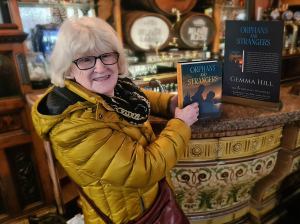
Book Week Orphan And Strangers by Gemma Hill

Orphan And Strangers

Bio

William’s choices in love and war drag him to the brink of a madness that thrusts him and his family into the heart of the Trouble and threatens to destroy them all.

Short excerpt from Chapter one

William watched dead eyed as the hilly ground held against the best efforts of the pallbearers to force the cheap flimsy coffin into the narrow slit in the ground.

He held intently to his image of Margaret’s face below the lid framed in a halo of hair the colour of ripened corn. The person they were preparing to pile filthy clay on couldn’t be his Margaret. His eyes fell on his daughter Trisha, It should be her I’m burying, he thought savagely.

Eight year old Trisha shrank back from the hatred in her father’s eyes

“Stop moving about,” her fourteen year old brother George whispered. “You know what happens when Da gets angry.”

“I’m afraid of the men with the shovels,” she said too loudly.

Her father turned. “You keep her quiet or I will,” he snarled at George.

Reverend Snodgrass snapped his prayer book shut and turned to the Furlongs, Margaret’s parents, Fergal and Maureen. The clash of the Furling’s Kerry brogue amongst the chatter of northern voices irked him. His mind went back to the promise he made to Sarah, William’s mother, on her death bed. He had broken it today by letting Margaret to be buried here in this graveyard. “William is not a well man.,” he said brusquely. “The War, you understand, I was hoping William’s sister Lisa would be here.. Lisa could always manage William.” He held up his hand as Fergal Furling started to speak. “Your daughter is at her rest,” he said, a note of tetchiness in his voice. “But there’s been talk in the village about …the children, especially the daughter,” he said almost under his breath.


Continue reading

Leave a comment

Filed under Art Tickle

Ashtray On A Harley Davison

About as useful as an ash tray on a Harley Davison

The funny things my granny says

I don’t understand it anyway

Where would the ashtray stay?

Wouldn’t the wind and

Passing cars blow it away?

Leave a comment

Filed under Poems

Singing In The Rain


Well, what else would I be doing on a wet Friday in August but singing my heart out in the upper Eccles of the my local library with a vocal couch and professional musician, courtesy of the Arts Council

I have discovered that singing is amazingly liberating; especially in a group of 20 other women and 2 men. (As usual the men are scarce on the ground.)

We crooned our way through The Tennessee Waltz and more lively numbers like The Galway Girl.

What took me to singing lessons? Haven’t I enough to be doing? We’ll, two reasons, the truth be told. Recently I heard a poet give a stand-up spontaneous stirring rendension of performance poetry and I was utterly blown away.

I reckoned the voice exercises and breathe control skills needed to sing is not dissimilar to that needed to give a poetry performance.

The writer in me believes if you can dream it, visualise it, you can achieve it.

My second reason is to write a song. Not just write it but sing it, yes sing it, at our next extended family get-together. And I happen to know there is just such a thing coming up in 2025.

That will shift the smirk off their faces. Who says I can’t sing? The cheek of them! Of course I’ll wait until they are well inebriated – or as they say in Ireland, well oiled, three sheets to the wind – you get the picture.

What else have I been doing?  They say to be an accomplished writer (and I am writing diligently every day) you should read widely. So I joined a book club

This month’s book is Graham Norton’s book FRANKIE.

I’m reliably told it has a twist in the tail.  I have just started it. Set in London, it’s about a man who is a carer for old rich people.

I’ll let you know how I get on reading it

Having just published my own second novel Orphan And Strangers I am trying to get my neglected writer’s blog writeyouwriteme.com tidied up before I start into the next novel.

However, while I’ve been writing my novels WordPress has up the ante and introduced a new block editor – the might Gutenberg editor. Boy, do I hate that thing. All things that were straight forward before are now damm hard to do!

Anyway, back to the singing and the song writing – can’t be that hard. Can It!

Gemma Hill©


2 Comments

Filed under Art Tickle

Truth be told

Appearance may appear to signal something. Almost immediately on first meeting or seeing someone or something our perception of them has already made a ‘truth’ about them. For Example – thinking of some of the people and scenes I have encountered this week.
A shabbily dressed man walked towards me in a street in the city. My immediate thought was – homeless man – could possible be tricky – move on – dont make eys
contact.
Further on a street a ‘call to support a cause’ was inviting shoppers to stop and hear his ‘truth’ about the right and wrongs of things – as he saw it.

Leave a comment

Filed under Art Tickle

Summer Holidays are here

Summer Holidays are here

The echoing slam of the door reverberates

My ten year old’s schoolbag hits the hall floor

He stands tall and strong

“Ready for Donegal and the caravan Mum?”

. For him

Shrieking seagulls dip their wings in the frothy foam of a fresh flood tide

Laid out like a bride’s lacy veil on moist golden sand

My son sees none of this.

His feet are racing away from me

The thrill of adventure gripping him

Agile as a mountain goat he climbs the sheer cliff face.

His mind set is on jumping from its highest peak

Body arched he flips into the Atlantic Ocean far below

Its turquoise eye tracks his descent impassionedly

He hit the sea with a victorious shout

Disappears beneath its swelling foam

From behind the fingers covering my eyes

Frightening seconds slide past.

The cries of the sea fowl is loud, plaintive

My breath stills in my breast

Will he come up from beneath

Then, hair plastered against his skull

His heads  parts the heaving swell

Breath returns to my starved lungs

Bobbing like a cork on the swell of a breaker

The sea’s buoyancy carried him towards me

And safety

His wet triumphant footsteps trample over

The delicate edging of the sandy bride’s veil

For my son summer has come

Gemma Hill Dec 2016 ©

Leave a comment

Filed under Short Stories 2

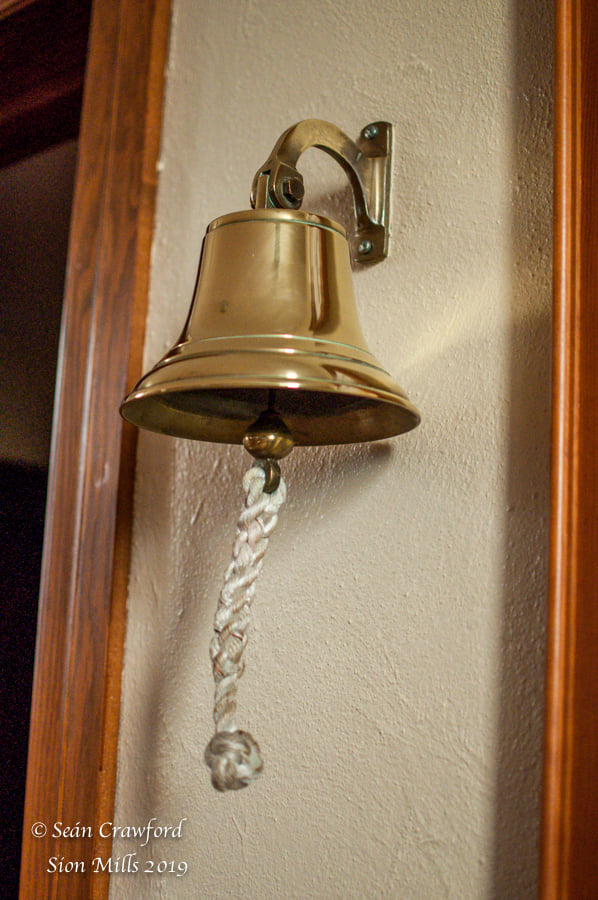
Days like these. This is one of them  Is it time to ring the bell?

There are day  wish I was a knitter and not a blogger. Todays is one of those days. I have lost my edit page and my mojo for writing.

Leave a comment

Filed under Short Stories 2

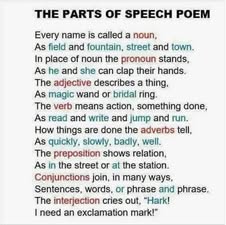
The Parts of Speech Poem

Leave a comment

July 28, 2025 · 9:52 pm

Diversity…

Diversity

Diversity is our saving grace
No longer do we live alone in this place
Other cultures bring prosperity and
Add new religions, customs to our race

Is this progress I hear you sigh?
Are we to be a melting pot now?
No. No one can ever take our culture away
But to embrace others
Will strengthen our beautiful place
So let’s embrace diversity
It’s here to stay.

Gemma Hill  

Leave a comment

Filed under Short Stories